Redesigning the sound experience at Gett
- Problem
- Drivers kept complaining about the sounds in our driver app, but sound had no owner, no brief and no way to measure success.
- What I did
- Took ownership, built the case with driver data, set the brief and principles, and led a small team with an external sound designer to launch.
- Result
- From 65% of drivers unhappy with the sounds to 80% satisfied, and sound became a recognized layer of the product.
Context
Drivers hear the app all day: every new ride, every cancellation, every update. The driver app still used sounds from the GetTaxi days, and the brand had moved on. Drivers told us exactly how it felt:
- 01
"The notifications stress me out. I mute my phone, and then I miss rides."
- 02
"After 8 hours on the road, these sounds wear me out."
- 03
"The app just screams at me."
- 04
"The sounds are high and harsh. They remind me of missile alerts."
65%
of 500 drivers rated the sounds 1 or 2 out of 5
Everyone agreed the sounds were a problem, but it never made it to the top of anyone's list. Sound doesn't show up in screenshots, so it had no owner.
My role
I owned the problem from the first complaint to the final survey: I made the case for it, shaped the brief, built the team, set the decision criteria and brought product, engineering and our external partner to one launch.
How I led it
- 1Make the case with evidenceComplaints are easy to postpone, numbers are not. I put driver quotes next to a survey of 500 drivers: 65% rated the sounds 1 or 2 out of 5. And I tied it to the business: drivers who mute their phones miss rides.
- 2Build the right teamSound design is its own craft, so instead of stretching the team, we partnered with an expert. Yael, our Product Design Team Lead, brought in Nadav Ravid, an external sound designer. I kept the direction, the brief and the final decisions.
- 3Set the brief before the soundsEach of Gett's brand values (human, professional, optimistic, safe) became a sound principle: a personal address that doesn't scream, minimal with no drama, calm and close, and a feeling of safety. One idea held it together: Quiet Confidence.
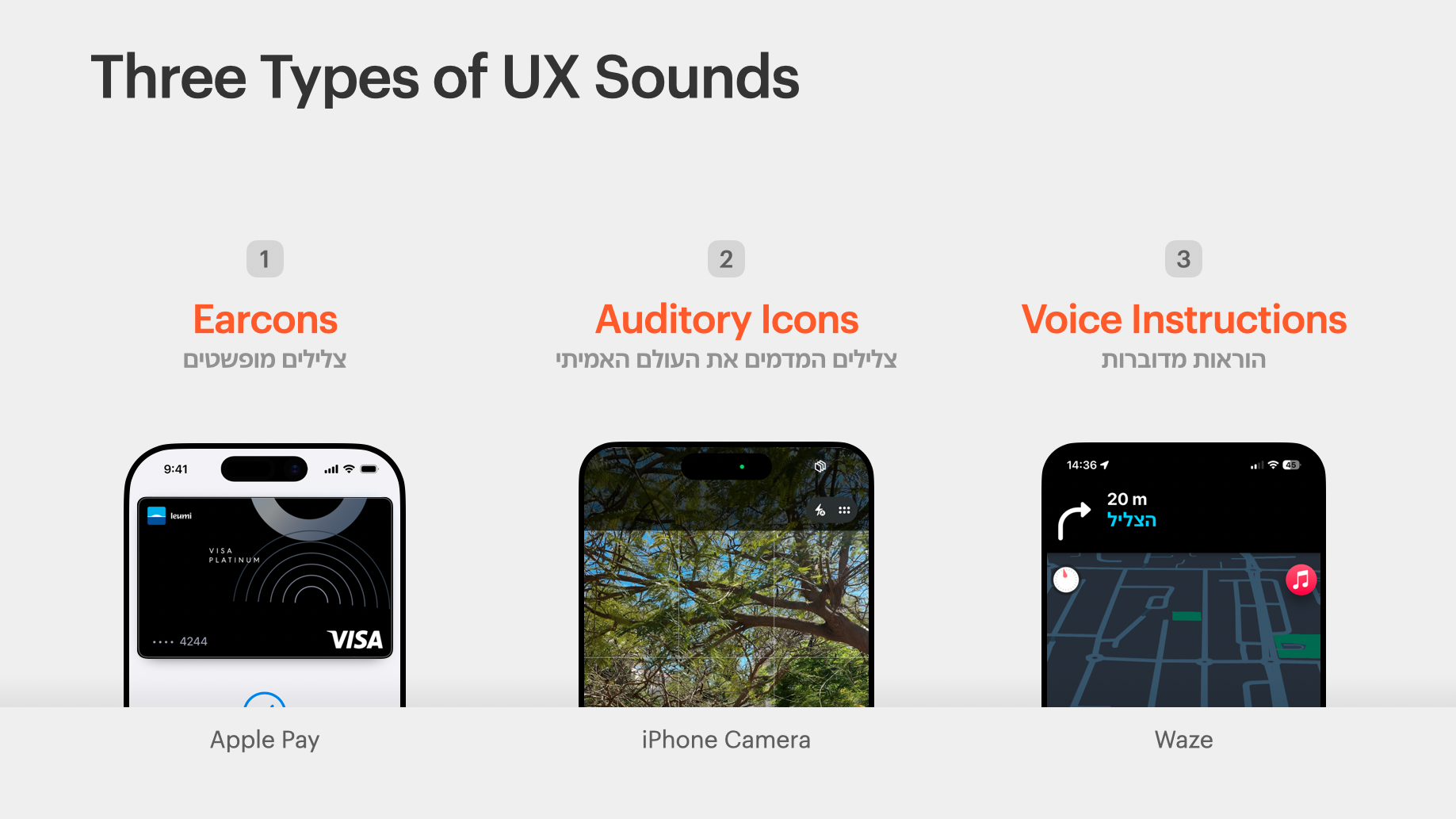
- 4Turn taste into criteriaSound reviews easily become "I like it" debates. We agreed on a shared language (three types of UX sounds) and hard limits, like a frequency range of 250Hz to 10,000Hz instead of the old shrill high end. Every sound was judged against them.
- 5Decide with options, not opinionsThree concepts were developed across a clear spectrum: Evolutionary, Technological and Human. We played each one on real app moments and next to Uber and Lyft, so stakeholders chose between real alternatives. We went with the Human concept, because it came closest to how we wanted the app to sound: Quiet Confidence.
- 6Measure the outcomeWe closed the loop with the same survey of 500 drivers after launch, so the result was measured the same way as the problem.
Key decisions
- A business problem,
not an aesthetic oneFraming sound around missed rides and driver wellbeing, not taste, is what moved it from a wish list to the roadmap. - Outside expertise,
inside ownershipAn external sound designer brought the craft. The design team owned the brief, the principles and the decisions, so the result stayed true to Gett. - Principles that outlive
the projectThe brand-to-sound principles and the frequency limits give anyone adding a sound in the future a clear bar to meet.
Outcome
Satisfaction flipped: 80% of drivers now rate the sounds 4 or 5 out of 5. Beyond the numbers, sound is now part of how the team designs, with its own principles and quality bar.
65%
drivers dissatisfied with in-app sound
80%
drivers satisfied after the change
+6%
business ride acceptance
+15%
delivery order acceptance
The acceptance lifts also came from the screen redesign that shipped alongside the new sounds.
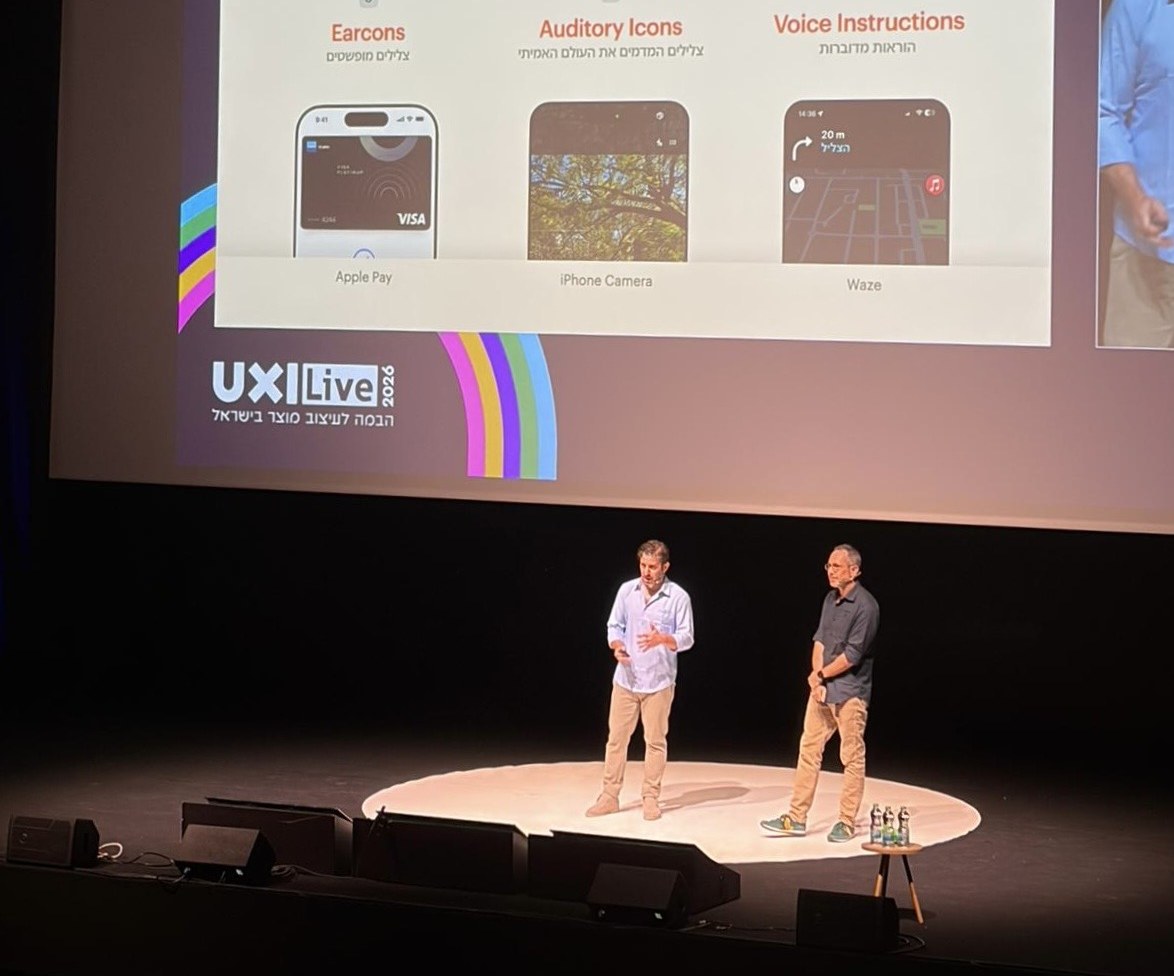
Together with Nadav Ravid, the sound designer we partnered with, I shared the process with the wider design community at UXI Live 2026, in a talk called "The Designer is a DJ". Watch the talk.
Reflection
I knew about this problem long before we fixed it. It sat on my to-do list for too long, and drivers paid for that delay every shift.
The lesson I took as a design leader: my job includes the layers no one is asking about. The hard part wasn't designing the sounds, it was giving an orphan problem an owner, a brief, the right people and a way to measure it. Today I ask every team the same question: how does your product feel with your eyes closed?