Leading the shift to AI-first design
- Problem
- A five-person design team supporting about 20 PMs, so every idea waited for a designer before anyone could see it.
- What I did
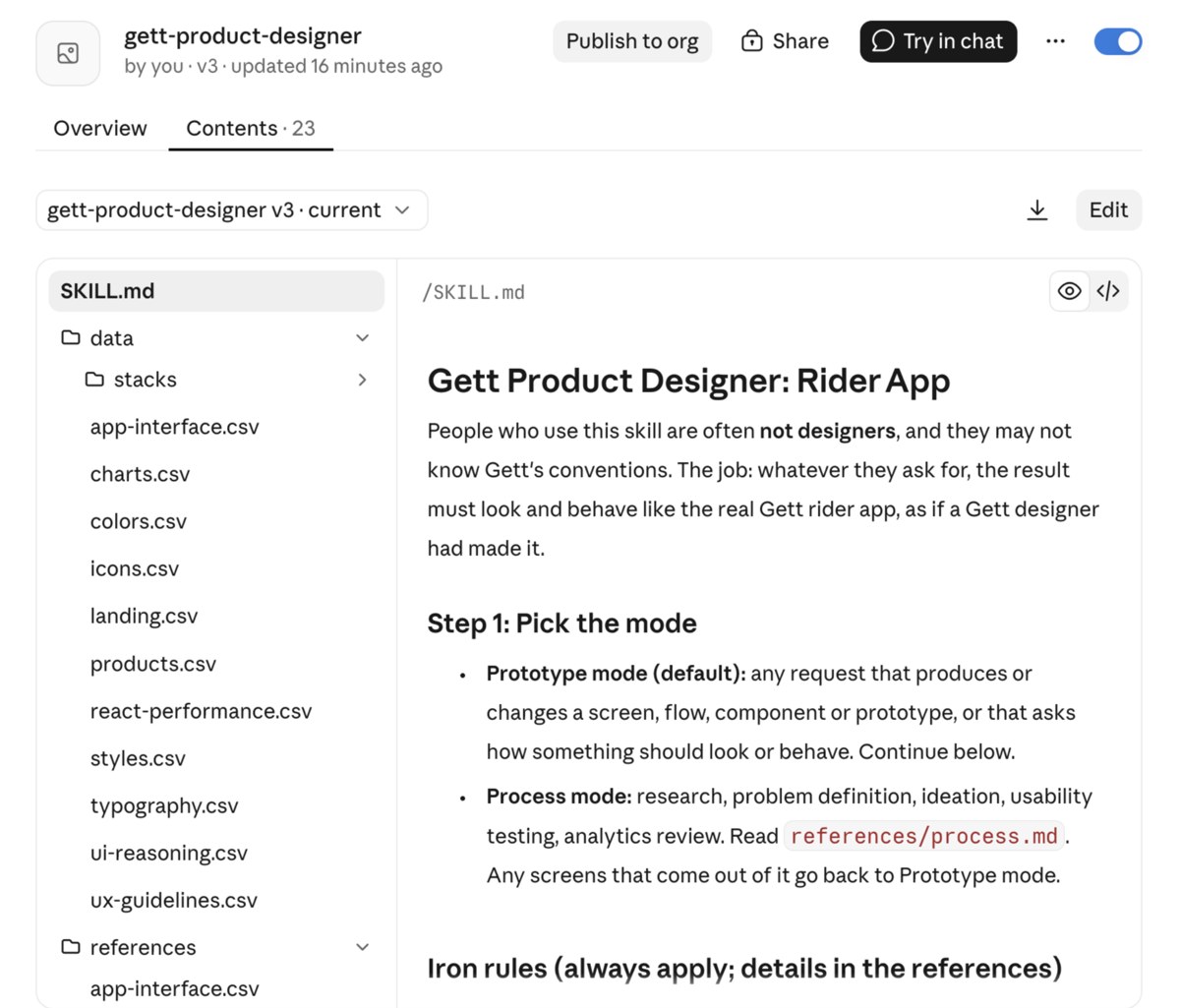
- Planned a three-step shift to AI-first design and led the first step: Claude skills for product design and content, working with our PRD skill.
- Result
- Anyone in product can now create an advanced, almost dev-ready demo with real content.
Context
Gett's product design team is five people, supporting around 20 product managers across the whole marketplace: rider and driver apps, a B2B booking platform, internal tools and airport kiosks. Every idea had to wait for a designer before anyone could see it, which made design the bottleneck between an idea and a decision.
My role
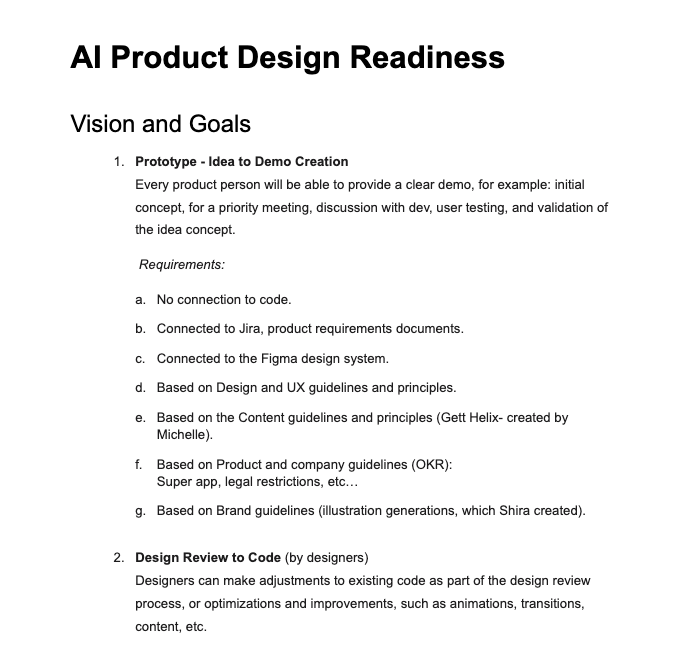
I set the vision and wrote the AI Product Design Readiness plan, defined the requirements for each step, and led my team through building it. Yael, our Product Design Team Lead, built the Product Design skill, and Michelle, our content designer, built Helix.
Approach
I planned the shift in three steps, each one building on the last. The first is done, and the next two are coming.
- 1Idea to demoDoneAnyone in product can turn an idea into a clear, working demo, for an early concept, a prioritization meeting, a conversation with developers, user testing, or checking whether an idea holds up. Demos are built with Claude, based on our design system and our UX, content, brand and product guidelines, and connected to Jira, our PRD documents and our content system (Helix). They never touch production code.
- 2Design review in codeComingDesigners polish what developers built directly in the code: animations, transitions, copy and more. The designer works on the developer's build, and the developer reviews and merges the changes.
- 3Product builderComingDesigners take a design from Figma all the way to working code.
Helix, our content system
As part of the same plan, we built Gett Helix. It redefines the content designer's role in AI: setting and checking the quality and safety of content across the whole Gett platform.
- Content for everyoneAnyone on the product team can generate, test and check on-voice, on-brand copy through a set of Claude skills, built on Gett's voice, tone, component patterns and personas.
- Time for strategyGenerated copy starts much closer to Gett's standards, so the content designer spends less time fixing copy and more on the content problems that connect product to the business.
- Measurable qualityAutomated checks run against key copy patterns, and the system improves every time a gap is found.
Helix covers every product surface. It follows Gett's voice, tone, grammar and component patterns, legal and accessibility (WCAG) guidelines coordinated with the Legal department, and the company's product guidelines and OKRs.
One connected system
The pieces work together. The Product Design skill calls Helix and our PRD generator, so a demo comes out with on-brand copy and clear requirements in one place.
Key decisions
- Demos before production codeThe fastest value with the lowest risk. Nothing reaches the product without a developer, so teams could adopt it without fear.
- Build on what already existsThe skills use our design system, guidelines, Jira and PRDs, so every demo looks and behaves like Gett from day one.
- Content as its own systemWith Helix, content design owns the standard up front instead of fixing copy after the fact.
Outcome
Step 1 is being released now, so there is no official data yet. In our internal tests, a demo that used to take weeks now takes minutes to a few hours, depending on its complexity and the expected outcome.
Reflection
The AI was the easy part. The real work was the foundations: a clear design system, written guidelines and content standards. AI amplifies whatever you give it, so the quality of our inputs decided the quality of every demo.
It also brought new challenges. The line between product manager and product designer got blurrier, the handoff to delivery needed new rules, and suddenly anyone could produce a polished prototype without a designer. As the design leader, my job shifted from producing to safeguarding: defining who owns which decisions, setting the quality bar every demo must meet, and making sure designers stay involved where judgment matters most.